Yuwei Wu

Yuwei Wu

I'm a final-year Ph.D. candidate at GRASP Lab, in Electrical and Systems Engineering at the University of Pennsylvania, advised by Prof. Vijay Kumar. Before my doctoral research, I worked with Prof. Fei Gao at Zhejiang University on trajectory optimization.

I work on learning-enabled task and motion planning for aerial robots in real-world environments. My work has been published in IEEE RA-L, T-ITS, T-ASE, ICRA, IROS, MRS, WAFR, and DARS, with recognition including IROS 2026 Best Paper Award at the Foundation Models in Multi-Robot Systems Workshop, IROS 2025 Best Paper Award Finalist, Best Paper Award nomination at DARS 2024, and Oral Highlight at the ICRA 2025 Doctoral Consortium. I serve as Associate Editor for IEEE Robotics and Automation Letters (RA-L), Guest Editor for Autonomous Robots, student representative on the IEEE Technical Committee on Aerial Robotics and Unmanned Aerial Vehicles, and organizer of workshops at RSS 2025 and IROS 2026. I have reviewed over 100 submissions for more than 10 leading venues.

I am currently on the 2026-27 job market!


Recent News:

Research taxonomy


Central research question: How can we identify the right level of abstraction to reduce complexity while preserving the essential structure needed for motion and mission autonomy?

Mobile robots must operate in complex environments with limited onboard computing resources due to Size, Weight, and Power (SWaP) constraints. My research enables real-time mission reasoning and motion planning under tight computational constraints. I develop learning-enabled optimization exploiting physical, geometric, and semantic structure for efficient, robust robot motion. My future vision extends to safe aerial physical interaction and multi-robot collaboration for complex construction and manufacturing.

Physical abstractions for learning and optimization

Physical abstractions for trajectory optimization

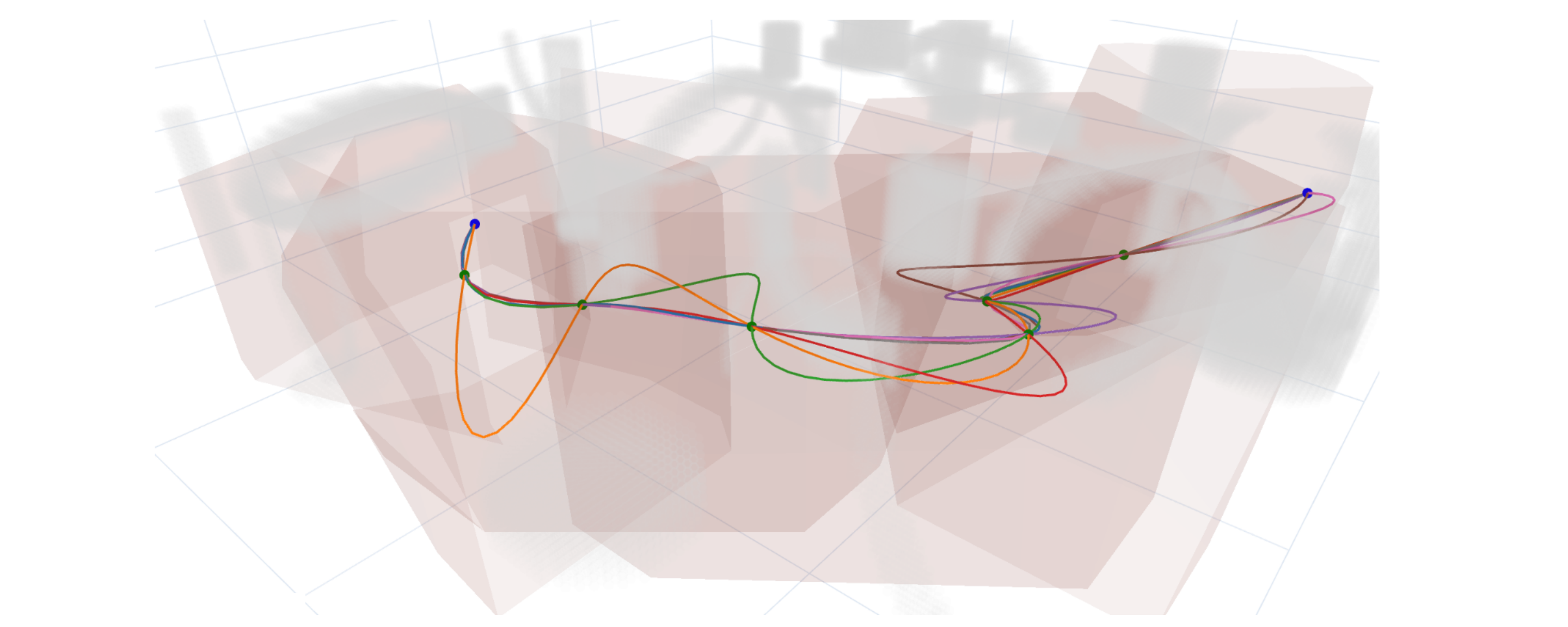
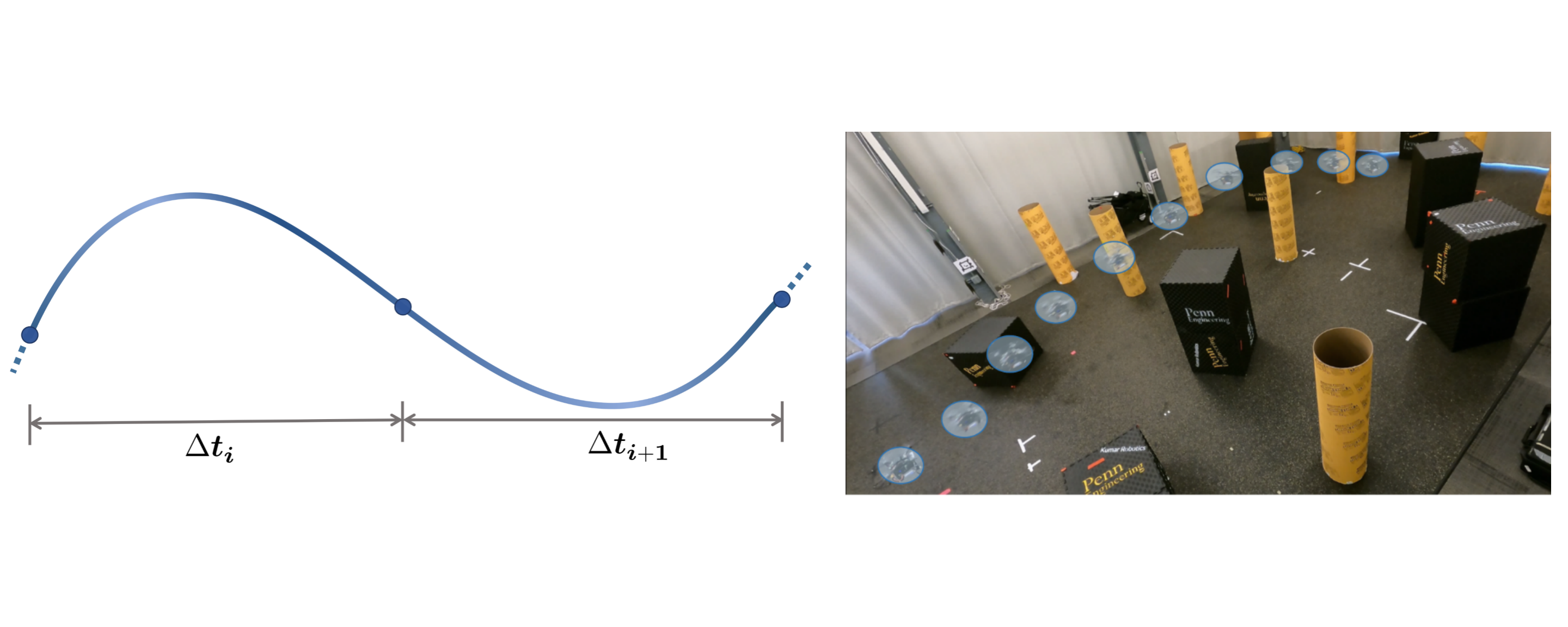
Long-horizon, dynamically feasible motion planning is challenging in high-dimensional systems. I formulate scalable, high-fidelity trajectory optimization using physically grounded abstractions, including differential flatness and piecewise polynomials.

Geometric reduction for scalable environmental representation

Geometric reduction for environmental representation

Robots collect dense and noisy spatial data, but only a small subset determines whether a motion is feasible. I develop real-time algorithms with compact geometric and spatiotemporal representations for safe and efficient planning.

Semantic representations in multi-agent and foundation models

Semantic representations in multi-agent and foundation models

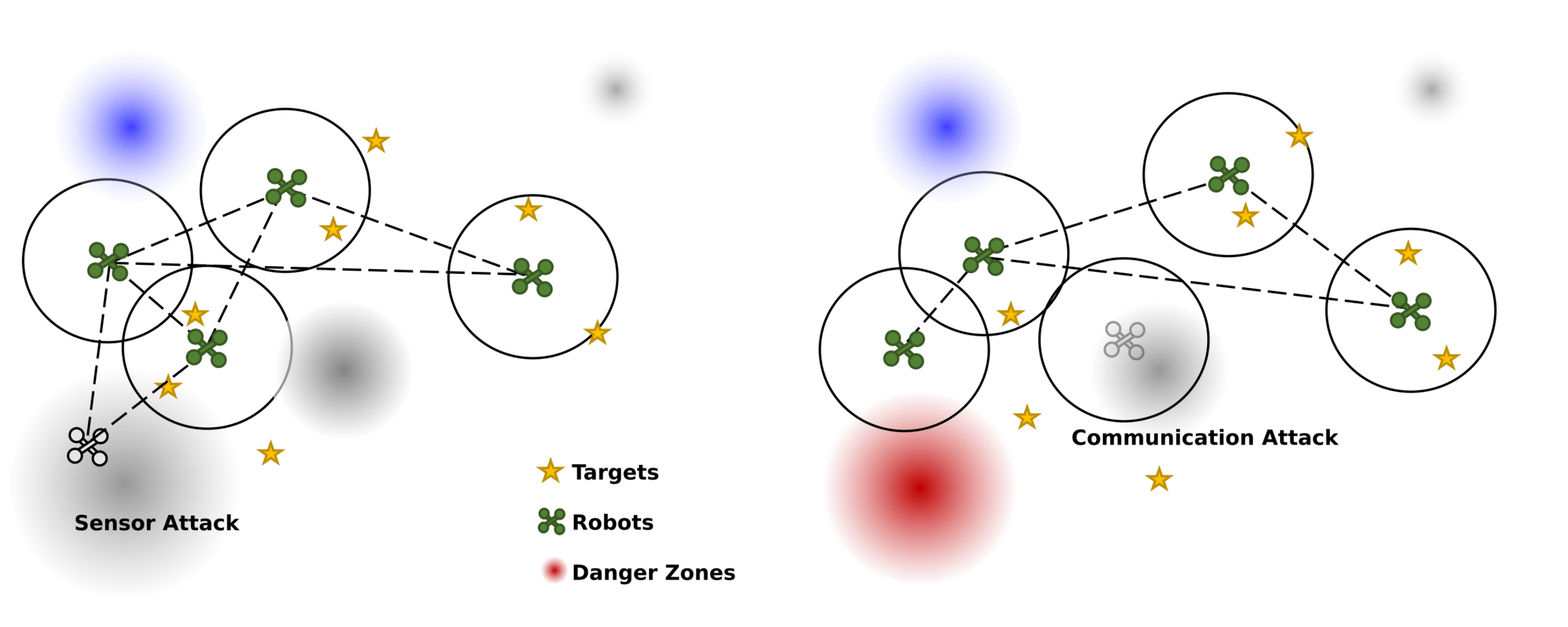
Foundation models can support robot decision-making, but their outputs must be grounded in physical feasibility and robot capabilities. I translate language and feedback into structured operators, programs, optimization objectives, and constraints for verifiable robot execution.


Falcon4 model adapted from Kumar Robotics' mrsl_quadrotor repository; license and attribution.